
Proteinase K
£43.00
Description
Microzone’s Proteinase K, a highly active serine protease derived from Tritirachium album, is designed to degrade proteins efficiently across a broad range of conditions. With a concentration of 20 mg/mL, this solution is ready to use and requires no reconstitution, offering convenience and flexibility for a variety of protocols. Known for its stability in high temperatures, varying pH levels, and denaturing conditions, Proteinase K is ideal for applications including nucleic acid extraction, DNase/RNase inactivation, and in situ hybridization.
Additional information
| Quantity | 1mL |
|---|
Microzone’s Proteinase K, a highly active serine protease derived from Tritirachium album, is designed to degrade proteins efficiently across a broad range of conditions. With a concentration of 20 mg/mL, this solution is ready to use and requires no reconstitution, offering convenience and flexibility for a variety of protocols. Known for its stability in high temperatures, varying pH levels, and denaturing conditions, Proteinase K is ideal for applications including nucleic acid extraction, DNase/RNase inactivation, and in situ hybridization.
- Nucleic Acid Extraction (DNA/RNA Isolation)
- Enzyme Inactivation (DNase/RNase)
- In Situ Hybridization (Enhances probe accessibility by digesting protein barriers)
- Concentration: 20 mg/mL serine protease solution.
- Optimal Conditions: pH 8.0; 50-60°C for increased activity.
- Activators: Requires 1–5 mM Ca²⁺ for enhanced stability and activity.
- Inhibitors: Inhibited by DIFP or PMSF at 5 mM concentration.
- Storage: Store as recommended to preserve stability and limit light exposure.
Related products
-

Prefilled 2.0ml Tubes (Silica Beads)
£130.00
Prefilled 2.0ml tubes Silica (glass) beads – acid washed and heat treated Ready to use Compatible with all common bead homogenizers
-

Just Water – PCR Grade Water
5JWA £34.50
PCR grade water for all you requirements.
-
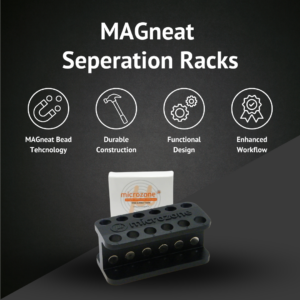
MAGneat Magnetic Separation Racks
2MSR Price range: £125.00 through £155.00
A range of separation racks designed with Neodymium magnets.